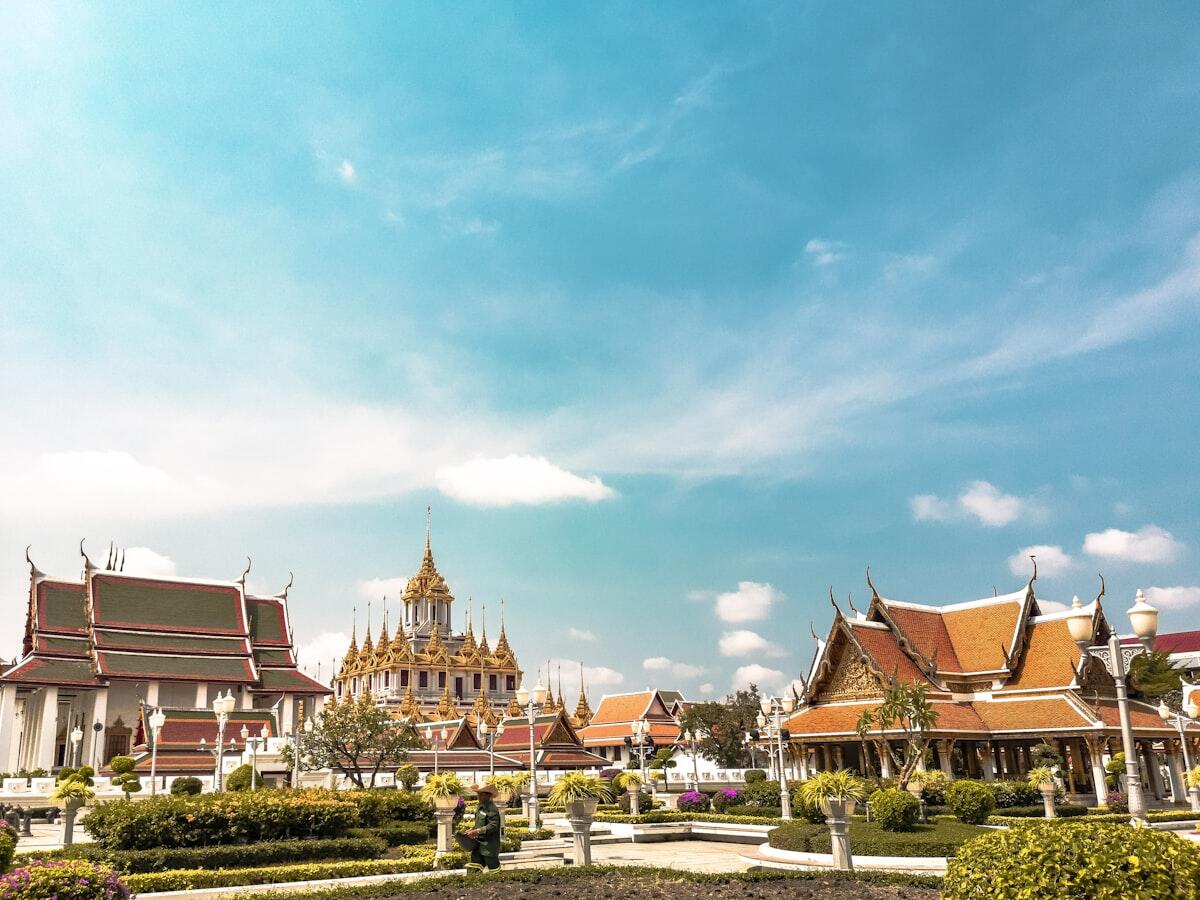
Why UK Investors Are Looking at Phuket in 2026
Phuket has been on the radar of international property investors for two decades. What has changed in 2026 is the combination of factors making it particularly attractive to UK buyers specifically.
Sterling's relative strength against the Thai Baht has improved purchasing power for UK investors compared to several years ago. Phuket's tourism recovery following COVID-19 has been strong and sustained. Visitor numbers exceeded pre-pandemic levels in 2024 and continued growing into 2025 and 2026. The resulting demand for short-term rental accommodation has driven rental yields in prime areas to levels that are difficult to achieve in the UK market.
Simultaneously, the UK property market has seen compressed yields in most regions, increased stamp duty costs, and a legislative environment that has become progressively less favourable for buy-to-let investors. UK landlords facing 24% corporation tax on buy-to-let income held in companies, Section 24 mortgage interest relief restrictions, and rising compliance costs are increasingly looking at international alternatives.
Phuket offers a combination of high rental yields, no capital gains tax on property sales, no inheritance tax on Thai property, and an established infrastructure for foreign property ownership that makes it more accessible than many competing destinations. Our Thailand versus Dubai comparison sets out how the two markets weigh up for UK buyers.
This guide covers what UK buyers need to understand before investing: the legal ownership framework, realistic yield expectations, the buying process step by step, the genuine risks, and how JT Investments supports UK buyers through the entire process.
Can UK Buyers Own Property in Phuket?
This is the first question every UK buyer asks, and it deserves a clear answer before anything else.
Thai law prohibits foreigners from owning land outright. A UK national cannot hold the freehold title to a plot of land in Thailand in their own name. This is a fundamental feature of Thai property law, not a loophole or a grey area.
However, there are several legally established structures through which UK buyers can invest in Phuket property with secure, documented ownership rights.
Freehold condominium ownership (Condominium Act)
Thailand's Condominium Act permits foreigners to own condominium units on a freehold basis, subject to a quota limit: no more than 49% of the total floor area of any condominium building can be foreign-owned. When you purchase a freehold condominium unit in Phuket, your name appears on the title deed (Chanote) at the Land Department. This is genuine, registered ownership with full legal protection.
Freehold condominiums represent the most straightforward ownership structure for UK buyers and the one with the clearest legal standing. The majority of new development in Phuket that is marketed to international investors is structured as freehold condominium.
Leasehold ownership
Leasehold ownership allows foreigners to hold long-term registered leases on property, typically 30 years, with options to extend for additional 30-year terms. The lease is registered at the Land Department and provides documented, legally enforceable rights to use and occupy the property for the lease term.
Leasehold is commonly used for villa properties, where the villa structure is leasehold but sits on land that is either Thai-owned or held in a Thai company structure. The legal security of a leasehold depends on the quality of the lease documentation and the financial stability of the entity that holds the underlying land title.
Thai company structure
Some foreign buyers use a Thai limited company to hold property, with the foreign buyer as a shareholder. This structure is legally permissible but has become more scrutinised by Thai authorities in recent years. Thai law requires that the majority of shareholders in a Thai company be Thai nationals. Nominee shareholder arrangements, where Thai nationals hold shares on behalf of the foreign investor without genuine participation, are illegal under Thai law and carry risk of enforcement action.
JT Investments does not recommend or facilitate nominee shareholder structures. Our Thailand portfolio focuses on freehold condominium ownership and properly documented leasehold arrangements.
The practical implication for UK buyers
For most UK buyers investing in Phuket, the relevant ownership structure is freehold condominium for apartment-type units or properly structured leasehold for villa properties. Understanding which structure applies to a specific property before purchase is essential. Not all developers are equally transparent about this, and the legal implications of the structure affect both your security as an owner and the property's resale potential.
Phuket Rental Yields: What UK Investors Actually Earn
Rental yield is the primary financial metric for most UK investors considering Phuket. Here is the honest picture.
Gross rental yields in Phuket range from approximately 6% to 12% depending on location, property type, and management arrangement.
This compares favourably with most UK buy-to-let markets, where gross yields in most regions currently range from 4% to 7%. However, the gross yield figure requires significant qualification before it is useful for investment decisions.
Key variables that affect actual yield:
Occupancy rate.Phuket's tourism is highly seasonal. High season runs from November to April. Shoulder season covers May and early October. Low season covers June through September, when monsoon weather reduces visitor numbers significantly. A property that commands £150 per night in high season may be empty for weeks during low season. Investors should evaluate annual average occupancy rather than peak season rates.
Management fees. Short-term rental management in Phuket typically costs 20-30% of gross rental revenue. This covers platform management (Airbnb, Booking.com), cleaning, guest communication, key management, and maintenance coordination. Net yield after management fees is materially lower than the gross figure.
Developer-guaranteed returns. Many Phuket developers offer guaranteed rental returns, typically 6-8% for the first 2 to 5 years. These guarantees are provided by the developer, not by an independent financial institution. The security of the guarantee depends entirely on the financial strength of the developer. Developers who cannot sustain guaranteed returns have defaulted in multiple instances across Southeast Asian markets. JT Investments evaluates developer financial standing as part of our due diligence process.
Realistic net yield calculation: A Phuket property with a 10% gross yield headline typically produces a net yield of 6-8% after management fees, maintenance provisions, and periods of vacancy. This remains significantly above typical UK buy-to-let net yields but is a materially different figure from the headline gross. You can model different scenarios with our investment returns calculator.
JT Investments provides buyers with realistic net yield projections based on verified rental data for comparable properties in the specific location, not developer marketing figures alone.
Considering Phuket property investment? JT Investments' ACCA-registered advisers work exclusively with UK buyers across our Thailand portfolio. Free consultation with no obligation.
The Phuket Property Market in 2026: Key Areas and Price Points
Phuket is not a single market. Different areas have significantly different price points, rental demand profiles, and buyer demographics.
Patong and Karon
Patong is Phuket's main tourist centre. High short-term rental demand, proximity to nightlife and beaches, strong occupancy rates in season. Property prices are higher than less tourist-centric areas. Best suited to investors optimising for short-term rental yield rather than capital appreciation or personal use.
Kamala and Surin
More upscale areas with a mix of boutique hotels, luxury villas, and high-end condominium developments. Appeal to higher-spending tourists and expat residents. Rental yields can be strong for luxury units but the market is more sensitive to economic cycles.
Laguna and Bangtao
Established integrated resort area anchored by the Laguna Phuket complex. Mix of branded residences, golf course villas, and quality condominiums. Strong rental demand from families and long-stay visitors. Considered one of the most stable investment areas within Phuket.
Rawai and Nai Harn
Southern Phuket, more residential in character. Lower tourist density but established expat community and strong long-term rental market. Price points are generally lower than the west coast tourist areas. Suits investors targeting the long-term expat rental market.
Price ranges for UK investors (2026):
- Studio and one-bedroom condominiums in established areas: £80,000 to £200,000
- Two-bedroom condominiums in mid-range developments: £150,000 to £350,000
- Premium two and three-bedroom condominiums: £300,000 to £600,000+
- Luxury villas (leasehold): £400,000 to £2,000,000+
These figures are approximate and vary significantly by specific development, finish quality, and location within each area. You can browse current opportunities in our Thailand portfolio.
The Buying Process: Step by Step for UK Buyers
The Phuket property buying process is different from purchasing UK property. Understanding the steps prevents expensive surprises.
Step 1: Property selection and due diligence
Identify the property with the assistance of an adviser who understands the Thai legal framework. Before proceeding to any financial commitment, verify the legal ownership structure, the developer's track record and financial standing (for off-plan purchases), the title deed status, and any existing encumbrances on the property.
JT Investments conducts this due diligence process for every property in our portfolio before presenting it to UK buyers. This includes title deed verification, developer financial assessment, and confirmation of the applicable ownership structure.
Step 2: Reservation agreement and deposit
The buying process typically begins with a reservation agreement and a reservation deposit, usually £2,000 to £5,000 or the equivalent in Thai Baht. This secures the unit while the sales and purchase agreement is prepared. Reservation deposits are typically refundable if the formal contract review reveals material issues.
Step 3: Sales and purchase agreement review
The formal sales and purchase agreement (SPA) is the binding legal contract. It must be reviewed by an independent Thai lawyer (not the developer's lawyer) before signing. The SPA covers payment schedule (for off-plan purchases), handover conditions, defect liability, title transfer process, and dispute resolution.
This step is non-negotiable. Every UK buyer purchasing Phuket property should retain independent Thai legal representation regardless of how straightforward the developer presents the process.
Step 4: Payment
For off-plan purchases, payment is typically structured in stages tied to construction milestones, a model that distributes financial risk across the construction period rather than requiring full payment upfront. Typical payment structures might be 20-30% on contract signing, further instalments at construction milestones, and the balance on completion.
For completed properties, payment is typically made in full on transfer of title.
Important: Funds must be transferred from outside Thailand in foreign currency to qualify for freehold ownership. Thai law requires a Foreign Exchange Transaction (FET) form, documentation that purchase funds were brought into Thailand from abroad, as a prerequisite for foreign freehold title registration. UK buyers must ensure their bank transfer is structured correctly to generate the required FET documentation.
Step 5: Title transfer
Title transfer takes place at the Phuket Land Department. Both buyer and seller (or their legal representatives) attend. Taxes and fees are paid at this stage, typically 2 to 3.5% of the registered property value, split between buyer and seller depending on negotiation.
For freehold condominium purchases, the Chanote title deed is issued in the buyer's name. This is the legally registered ownership document.
Tax Implications for UK Buyers Investing in Phuket
Tax treatment of overseas property investments for UK residents is complex and subject to individual circumstances. The following is general information only and not tax advice. UK buyers should obtain independent tax advice from a qualified adviser before investing. Our guide to tax structuring for UK investors explains the considerations in more detail.
Thai taxes: Thailand has no capital gains tax on property sales. Rental income from Thai property is subject to Thai withholding tax at 15% for foreign individuals. Annual property taxes in Thailand are low by international standards. Land and buildings tax was introduced in 2020 and rates for investment properties are typically 0.3% of appraised value annually.
UK taxes:UK residents are taxed on their worldwide income and capital gains. Rental income from Phuket property is declarable to HMRC and subject to UK income tax at the investor's marginal rate, with credit available for Thai withholding tax paid to prevent double taxation (subject to the UK-Thailand Double Taxation Agreement).
Capital gains on the sale of overseas property are subject to UK capital gains tax for UK residents. The principal private residence exemption does not apply to investment properties.
Inheritance tax: Thai property held by a UK domiciliary is potentially within the scope of UK inheritance tax on death, despite being physically located in Thailand. This is a frequently overlooked consideration for UK property investors abroad.
JT Investments works with ACCA-registered advisers who can structure investments appropriately for UK tax purposes. The interaction between Thai and UK tax treatment is one of the areas where professional advice produces material financial benefit.
The Genuine Risks: What UK Investors Need to Understand
JT Investments believes that honest risk disclosure is not only an ethical obligation but a practical one. Investors who understand what can go wrong make better decisions and have more realistic expectations.
Developer risk on off-plan purchases
Off-plan property investment in any market carries the risk that the developer does not complete the project as specified, completes late, or in the most serious cases becomes insolvent before completion. Thailand's regulatory framework for property developers is less mature than the UK's. There is no equivalent of the UK's NHBC warranty or the consumer protection provisions of the UK Consumer Rights Act.
Mitigating developer risk requires thorough assessment of the developer's track record, financial standing, existing completed projects, and the contract terms that protect the buyer if completion is delayed or the specification changes. JT Investments will not include a development in our portfolio without completing this assessment, and we decline to work with developers whose risk profile is unacceptable regardless of the commission structure on offer.
Currency risk
A UK buyer purchasing in Thai Baht is exposed to GBP/THB exchange rate movements for the duration of the investment. The value of rental income received in Baht and of the property itself when sold will be affected by exchange rate movements that are outside the investor's control. Rental income in Baht that represents a 7% yield today may represent a lower effective sterling yield if the Baht weakens against sterling over the holding period.
Liquidity risk
Phuket property is significantly less liquid than UK property. The pool of buyers for a specific condominium unit in Phuket is narrower than for a comparable UK property. Resale processes take longer. In periods of market uncertainty or economic stress, achieving a sale at the desired price may take 12 to 24 months or more. Investors should not commit capital to Phuket property that they may need access to on short notice.
Legal and title risk
Thailand's land registration system is generally reliable, but title disputes, encumbrances on land, and irregularities in the registration of older properties are genuine risks that require thorough legal due diligence. For off-plan developments specifically, ensuring that the developer holds clear title to the land on which the development is being built is essential, and not something buyers should take on trust from marketing materials.
Regulatory and political risk
Thailand's regulatory environment for foreign property ownership has been broadly stable but is subject to political change. Any change in the Condominium Act's 49% foreign ownership quota, restrictions on foreign fund transfers, or changes to the tax treatment of rental income would affect the investment case. These risks are impossible to quantify but real.
Management and maintenance risk
A Phuket investment property that is managed poorly, with high vacancy, maintenance backlogs, or declining condition, produces lower returns and a lower resale value than the purchase price analysis suggested. Management quality varies significantly among operators. Selecting a management company with a verifiable track record in the specific area is as important as the property selection itself.
Why UK Investors Use JT Investments for Phuket Property
JT Investments is the property investment arm of Jones and Thomas, an ACCA-registered accountancy practice. Our Phuket portfolio is curated specifically for UK buyers. We only present developments that have passed our due diligence process on developer standing, legal structure, and realistic yield projections.
What working with JT Investments means for UK buyers:
Every property in our portfolio has been verified for title status, legal ownership structure, and developer track record. We do not list properties we would not recommend to our own clients.
Our ACCA-registered advisers understand the UK tax treatment of overseas property income and capital gains. We work with UK-qualified accountants and independent Thai lawyers to ensure buyers have the professional support they need at every stage.
We are paid by developers when sales complete, so UK buyers do not pay us a fee. This means our service is free to you, but we are transparent about this arrangement and the potential conflict of interest it creates. Our response to that conflict is to be selective about which developers we work with and honest about risks, so that our reputation with UK buyers is protected over time.
We provide ongoing support after purchase, not just transaction support. Questions about rental management, tax reporting, property maintenance, or potential resale are part of the relationship, not the end of it.
FAQs
Can UK citizens own property in Phuket?
Yes, with important qualifications. UK citizens can own freehold condominium units (subject to the 49% foreign ownership quota per building) and can hold long-term registered leasehold interests in villa properties. UK citizens cannot own land outright in Thailand. The ownership structure of any specific property should be verified by independent legal counsel before purchase.
What rental yields can I expect from Phuket property?
Gross yields of 6-12% are achievable in well-located properties with good management. Net yields after management fees (typically 20-30% of gross rental revenue) and maintenance provisions are typically 5-8%. Developer-guaranteed returns should be evaluated in the context of the developer's financial standing rather than taken at face value.
Do I pay UK tax on rental income from Phuket property?
Yes. UK residents pay UK income tax on worldwide rental income, including from Phuket. The UK-Thailand Double Taxation Agreement provides credit for Thai withholding tax paid, preventing full double taxation. Independent tax advice is essential before investing.
What is the minimum investment for Phuket property?
Entry-level condominiums in established Phuket areas start from approximately £80,000 to £100,000. JT Investments' Thailand portfolio includes properties across a range of price points from this entry level to luxury villas above £1 million.
How long does the buying process take?
For completed properties, the purchase process from reservation to title transfer typically takes 4 to 8 weeks, depending on legal due diligence and fund transfer timing. For off-plan purchases, the investment is made progressively over the construction period, with title transfer on completion.
What happens if the developer goes bust before completing my off-plan property?
This is a genuine risk that cannot be eliminated, only mitigated through developer due diligence and contract terms. JT Investments assesses developer financial standing before including any development in our portfolio. Buyers retain independent Thai lawyers who review contract terms including protections in the event of developer insolvency.
Is Phuket property a good investment compared to UK buy-to-let?
This depends entirely on individual circumstances, risk appetite, tax position, and the specific properties being compared. Phuket offers higher gross yields and a more favourable tax environment than UK buy-to-let in several respects, but introduces currency risk, liquidity risk, developer risk (for off-plan), and more complex legal and tax compliance requirements. Our market comparisonlooks at this in more detail, and JT Investments' advisers discuss it with clients in the context of their specific situation rather than answering generically.
Can I get a mortgage to buy property in Phuket?
Thai banks do not typically lend to non-residents on residential property. Some international banks and specialist lenders offer foreign currency mortgages secured on Thai property, but these are less accessible than UK mortgage finance and carry their own costs and risks. Most UK investors purchasing in Phuket do so with cash. JT Investments can discuss financing options in the context of individual circumstances.
What are the ongoing costs of owning Phuket property?
Annual land and buildings tax (0.3% of appraised value for investment properties), common area maintenance charges (for condominiums, typically £100 to £300 per month depending on development), management fees if rented out (20-30% of gross rental income), and property insurance. These costs should be factored into net yield calculations.
How do I repatriate rental income and sale proceeds to the UK?
Rental income and sale proceeds can be transferred from Thailand to the UK through standard international bank transfer. Large transfers may require documentation of the source of funds. There are no Thai restrictions on repatriating sale proceeds for properly documented foreign-owned condominium purchases, though tax reporting obligations in both countries apply.
Next Steps for UK Buyers Considering Phuket
If you are in the early stages of evaluating Phuket property investment, these are the practical steps we recommend.
Define your objectives clearly. Are you primarily seeking rental yield, capital appreciation, a personal use property with rental income potential, or a combination? The answer affects which areas, property types, and ownership structures are most appropriate for your situation.
Understand your tax position. Before committing to any overseas property investment, understand how rental income and eventual capital gains will be taxed in the UK. A one-hour conversation with a tax adviser who understands overseas property investment costs far less than the tax efficiency you lose without it.
Allocate appropriate capital. Phuket property is an illiquid investment. The capital you invest should not be needed at short notice. As a general principle, overseas property investment is appropriate as part of a diversified investment portfolio, not as the primary repository of savings.
Work with advisers who are transparent about risks and fees. JT Investments is paid by developers on successful sales, and we disclose this clearly because it is a potential conflict of interest. We address it through selectivity about which developers we work with and by maintaining the trust of our UK buyer base over time.
Take independent legal advice in both jurisdictions. Every Phuket property purchase should involve an independent Thai lawyer reviewing the title and sales and purchase agreement. UK investors should also take legal advice on how the purchase fits within their estate planning, particularly for inheritance tax purposes.
JT Investments supports UK buyers through every stage of this process, from initial portfolio review through legal support coordination, tax adviser introduction, and ongoing ownership management. Our free consultation is the starting point.
JT Investments is the property investment arm of ACCA-registered Jones and Thomas. We work exclusively with UK buyers investing in Dubai and Phuket. No buyer fees. Free initial consultation.
This article is for general information only and does not constitute regulated financial or investment advice. Past performance is not a guarantee of future results. All investment involves risk and your capital is at risk. Investment decisions should be made with independent financial advice. JT Investments does not provide regulated financial advice.
Ready to Invest with Confidence?
Speak with our ACCA-registered investment specialists. Free consultation, no obligation — just expert guidance tailored to your goals.